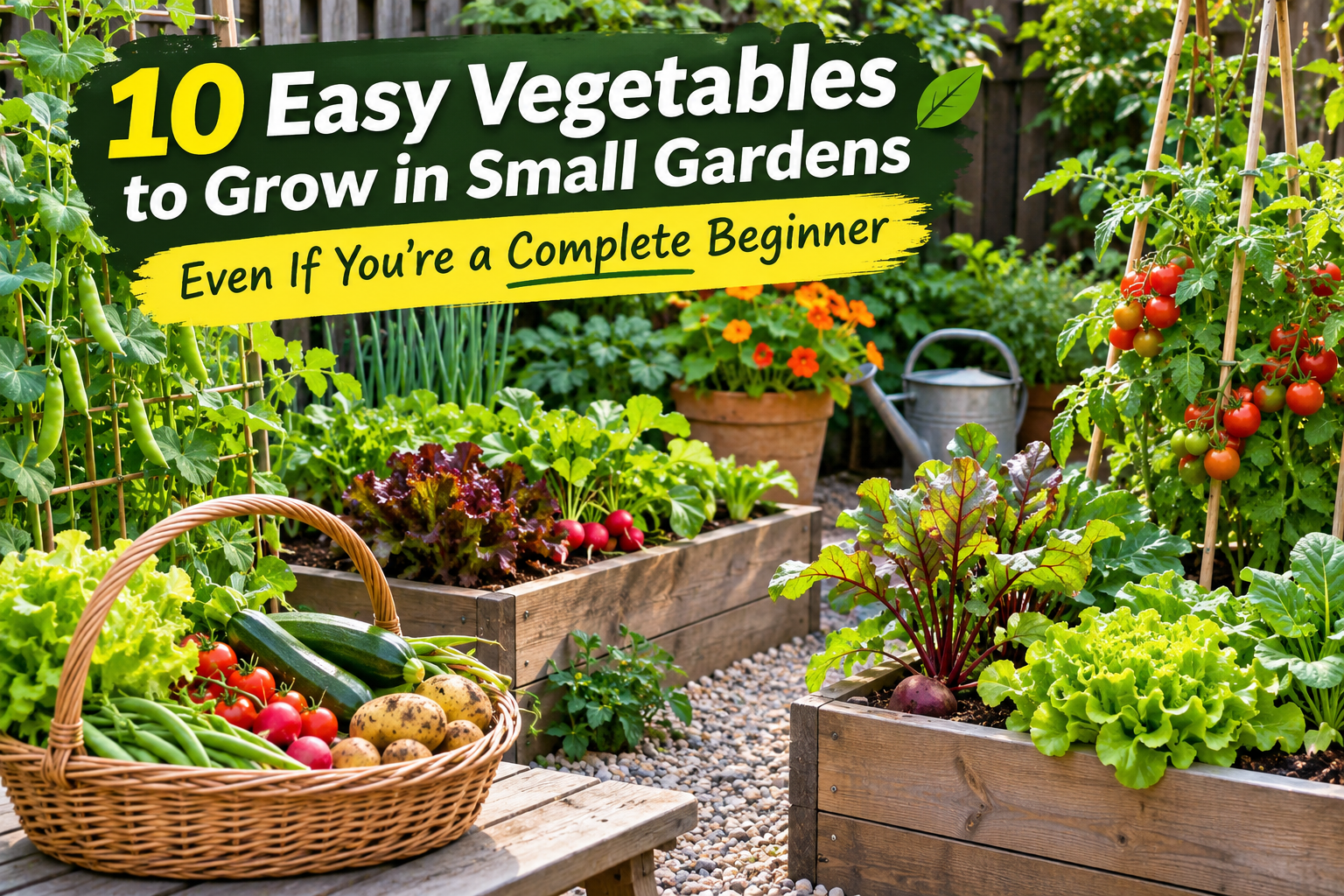
You don’t need an allotment, greenhouse or years of gardening experience to grow your own food. These 10 easy vegetables are perfect for beginners with small gardens, patios or containers. A sunny patio, a few containers or a modest garden bed can produce fresh vegetables throughout the growing season.
The trick is choosing crops that suit your space and starting small. These 10 Easy Vegetables are beginner-friendly and useful in the kitchen. Relatively straightforward to care for and suitable for UK gardens. Some need more sunshine or space than others, so pick two or three favourites rather than trying everything at once.
If you’re unsure when to sow your vegetables, the Royal Horticultural Society offers helpful growing advice for UK gardeners.
Before you plant 10 Easy Vegetables: five simple essentials
- Sunlight: Most fruiting crops, such as tomatoes and courgettes, do best with at least six hours of direct sun. Leafy crops can tolerate a little shade.
- Containers: Use pots with drainage holes and fill them with suitable peat-free compost. Larger pots dry out more slowly.
- Water: Check the compost regularly. Water thoroughly when needed rather than giving every pot a tiny splash.
- Feeding: Compost contains nutrients, but hungry crops grown in containers may need extra feed as the season progresses. Follow the product label.
- Timing: Seed packets give the best sowing dates for your variety. In much of the UK, tender crops should stay protected until the risk of frost has passed.
1. Radishes – quick results for impatient gardeners
Radishes are one of the most satisfying first crops because some varieties are ready in roughly four to six weeks in suitable conditions. Sow seeds thinly in a shallow container or garden bed, then keep the soil evenly moist.
Best for: Pots, raised beds and filling gaps between slower-growing crops.
Beginner tip: Sow a small row every couple of weeks during suitable weather instead of planting the whole packet at once. Hot, dry conditions can make roots woody or overly peppery.
2. Lettuce – fresh leaves from a small space
Loose-leaf lettuce is ideal for a beginner because you can harvest outer leaves while allowing the centre to continue growing. It works well in window boxes, troughs and raised beds.
Best for: Containers and partially shaded areas in warmer weather.
Beginner tip: Keep plants watered and sow little and often. In hot spells, give lettuce some afternoon shade to reduce bolting.
3. Spring onions – compact and versatile
Spring onions take up very little room and add flavour to salads, stir-fries and sandwiches. Sow them in short rows or small clusters in a reasonably deep container, following the seed packet for spacing.
Best for: Patio pots, raised beds and small kitchen gardens.
Beginner tip: Thin crowded seedlings if the packet recommends it, and harvest when the stems reach a useful size.
4. Peas – a rewarding crop to grow upwards
Peas are fun to grow, especially with children, and climbing varieties make good use of vertical space. Give taller plants pea netting, twiggy sticks or another sturdy support.
Best for: Sunny beds and deep containers with support.
Beginner tip: Choose a compact variety if you only have a patio. Pick pods regularly once they are ready to encourage continued cropping.
5. Bush beans – productive without a huge garden
Dwarf French beans are a practical choice when you want beans without a tall climbing frame. They like warmth, so sow outdoors after frost danger has passed and the soil has warmed, or start them under protection.
Best for: Sunny beds and larger patio containers.
Beginner tip: Pick pods while they are young and tender. Never eat raw or undercooked French beans; cook them thoroughly.
6. Cherry tomatoes – ideal for a sunny patio
Compact bush cherry tomatoes can produce plenty of fruit in a generous pot or grow bag. They need warmth, sunlight, regular watering and feeding once fruit develops.
Best for: Sunny, sheltered patios and balconies with sufficient load-bearing capacity.
Beginner tip: Buy a young bush-type plant for your first attempt. Check whether your chosen variety needs side-shoot removal; many bush varieties do not.
7. Potatoes – surprisingly good in containers
Potatoes can be grown in large containers or growing bags, making them useful where you cannot dig a vegetable patch. Start with certified seed potatoes, plant in suitable compost and add more compost around stems as they grow if your chosen method requires it.
Best for: Large pots, growing bags and garden beds.
Beginner tip: Keep compost moist but not waterlogged. Avoid eating green potatoes, which can contain harmful glycoalkaloids.
8. Beetroot – colourful roots and edible leaves
Beetroot is attractive, versatile and suited to raised beds or reasonably deep pots. Sow according to packet instructions, then thin seedlings as needed to give roots room to swell.
Best for: Raised beds and containers with enough depth for roots.
Beginner tip: Harvest smaller roots for tenderness. Young leaves can also be cooked or used in salads when suitable.
9. Swiss chard – a colourful, long-lasting leafy crop
Swiss chard has striking stems and can provide repeated leaf harvests over a long period. It is generally more tolerant of changing conditions than some salad crops, though it still needs water during dry spells.
Best for: Beds, large pots and edible ornamental borders.
Beginner tip: Take outer leaves first and leave the growing point intact. Cook mature leaves as you would spinach.
10. Courgettes – generous harvests if you have room
Courgettes can be prolific, but they are not tiny plants. Give each one a large container or generous bed space, rich soil and a sunny position. Protect young plants from late frosts.
Best for: Sunny gardens or spacious patios.
Beginner tip: Water consistently, feed when appropriate and pick young fruits regularly. If your garden is very small, choose a compact variety and check its mature spread.
Which 10 Easy Vegetables, 3 you should start with?
For a very small patio, try radishes, loose-leaf lettuce and spring onions. If you have a sunny space for a larger pot, add a compact cherry tomato. For a raised bed, peas, beetroot and dwarf French beans are great next steps.
Avoid buying ten types of seed and ten pots on day one. Start with two or three crops you genuinely enjoy eating, learn how quickly your containers dry out, and expand next season.
Looking for more ways to grow your own food in limited space? Explore our gardening books and growing guides for more beginner-friendly advice.
With these 10 Easy Vegetables the Common beginner mistakes to avoid
- Sowing too early: Warm-season plants may be damaged by frost even when daytime weather feels mild.
- Overcrowding: Follow seed packet spacing so roots and leaves have room to grow.
- Using pots without drainage: Waterlogged roots struggle to thrive.
- Forgetting to water: Containers can dry quickly during warm, windy weather.
- Growing only what looks impressive: Choose vegetables you will actually eat.
Frequently asked questions
What is the easiest vegetable for a complete beginner?
Radishes and loose-leaf lettuce are excellent starting points. Radishes offer relatively quick results, while lettuce can provide repeat leaf harvests.
Can I grow 10 easy vegetables without a garden?
Yes. Many vegetables grow well in pots, troughs and growing bags on a patio or balcony. Make sure containers have drainage, adequate sunlight and enough room for the mature plant.
When should I start growing 10 easy vegetables in the UK?
It depends on the crop and local conditions. Some hardy crops can be sown in cooler months, while tomatoes, courgettes and French beans need protection from frost. Always check the seed packet and your local forecast.
Do I need expensive gardening equipment?
No. A few suitable containers, peat-free compost, seeds or young plants, a watering can and basic hand tools are enough to begin.
Final thoughts on 10 Easy Vegetables
If you’ve enjoyed these beginner gardening tips, browse our collection of gardening books to help you take the next step.
Growing vegetables in a small space is about making good use of what you have, not creating the perfect garden. Start with a few manageable crops, watch how they respond to the weather, and enjoy your first harvest — even if it is only a handful of radishes.
Explore more beginner-friendly growing advice in our Vegetable Gardening and Small Gardens & Containers sections.
